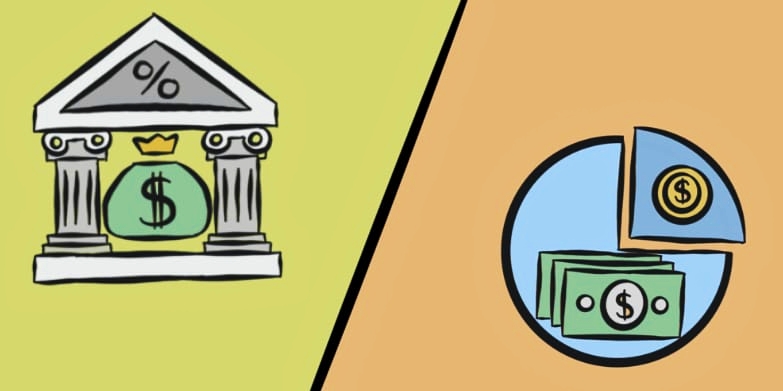
When the economy slows or prices spiral, the same question comes up again and again:
Who’s actually in charge here?
Is it the government, announcing budgets and stimulus packages?
Or the central bank, quietly tweaking interest rates behind closed doors?
The short answer is unsatisfying but honest: both matter — and neither fully controls the economy alone.
The long answer is where things get interesting.
Think of the economy as a moving vehicle.
Fiscal policy is the steering wheel.
Monetary policy is the accelerator and brake.
They’re controlled by different hands, work through different channels, and operate on different timelines — but they’re trying to move the same system forward without crashing it.
What is Fiscal Policy?
Fiscal policy is about government spending and taxation.
When governments:
- increase spending on infrastructure, welfare, or public services
- cut taxes to boost disposable income
they’re using fiscal policy to influence demand in the economy.
During downturns, governments often spend more to stimulate growth. During booms, they may cut back to avoid overheating.
Fiscal policy is visible. It’s debated in parliaments. It shows up in headlines. And it directly affects people’s lives.
But it also comes with trade-offs.
The Limits of Fiscal Power
Government spending isn’t free.
Higher spending often means:
- higher taxes later
- larger budget deficits
- more public debt
Political cycles also matter. Fiscal decisions are shaped by elections, public opinion, and ideology — not just economic conditions.
That means fiscal policy can be powerful, but slow, contested, and sometimes inconsistent.
What is Monetary Policy?
Monetary policy is run by central banks, and it focuses on money and credit.
By adjusting:
- interest rates
- money supply
- liquidity in financial markets
central banks influence borrowing, spending, saving, and investment.
Lower interest rates encourage borrowing and spending. Higher rates slow things down and control inflation.
Unlike fiscal policy, monetary policy works quietly — through banks, markets, and expectations.
And that subtlety is both its strength and its weakness.
Speed vs. Precision
Monetary policy is faster to implement. Central banks can change interest rates in a single meeting.
Fiscal policy, by contrast, takes time — budgets must be drafted, approved, and implemented.
But speed isn’t everything.
Monetary policy affects the economy indirectly. Lower rates don’t guarantee borrowing. Higher rates don’t instantly reduce spending. The impact depends on confidence and expectations.
Fiscal policy is blunt — but direct.
When They Work Together
The best outcomes usually happen when fiscal and monetary policy pull in the same direction.
During major crises, governments spend to support incomes while central banks keep credit flowing. Demand stabilises. Confidence slowly returns.
When policies are aligned, recovery is smoother and less painful.
But when they clash, problems emerge.
When Policies Collide
If governments spend aggressively while central banks try to curb inflation, the economy gets mixed signals.
One side pushes demand up.
The other tries to cool it down.
The result? Higher interest rates, rising debt costs, and policy confusion.
Coordination matters — but independence does too.
Why Central Bank Independence Exists
Central banks are often insulated from politics for a reason.
If governments could freely print money or force low interest rates, short-term popularity might come at the cost of long-term stability.
Independent central banks are designed to protect the currency — even when the decisions are unpopular.
That doesn’t make them more powerful than governments.
It makes them more focused.
So… Who Really Runs the Economy?
Here’s the uncomfortable truth: no one fully does.
Governments influence demand through spending and taxes.
Central banks influence behaviour through money and credit.
But households, firms, investors, and global forces respond in unpredictable ways.
Economic outcomes emerge from interaction — not control.
Policies shape incentives. People make choices. Markets react. And the economy evolves.
The Takeaway
Fiscal and monetary policy aren’t rivals — they’re complements.
Fiscal policy sets priorities and redistributes resources.
Monetary policy stabilises prices and expectations.
Neither can “run” the economy alone. And expecting them to is how disappointment begins.
The economy isn’t a machine with a single operator.
It’s a living system — guided, nudged, and occasionally rescued, but never fully commanded.
And maybe that’s the real lesson:
economic management is less about control — and more about balance.


Leave a Reply