When people talk about global power, they usually talk about armies, trade agreements, or technology.
They rarely talk about currency.
And yet, the most powerful economic tool in the world may not be military or diplomatic — it may be the fact that the US dollar sits at the center of global finance.
The dollar isn’t just America’s currency.
It’s the world’s currency.
And that gives the United States a level of influence most countries don’t have.
Why the Dollar Became Dominant
After World War II, the Bretton Woods system positioned the US dollar at the heart of global finance. Even after that system ended in the 1970s, the dollar retained its dominance.
Why?
Because:
- The US had the largest economy
- US financial markets were deep and liquid
- American institutions were considered stable
- US Treasury bonds became the global “safe asset”
Trust is the foundation of currency power. And for decades, the dollar has been the asset the world runs toward in times of uncertainty.
Even today, roughly 60% of global foreign exchange reserves are held in dollars.
That’s not habit. That’s structure.
Oil, Trade, and the “Petrodollar”
One of the clearest examples of dollar power is oil.
Global oil is priced primarily in dollars. If India imports oil from Saudi Arabia, payment is made in dollars. If Japan buys crude from the Middle East, dollars again.
This means countries must hold dollar reserves to participate in global energy markets.
The result?
- Constant demand for dollars
- Reinforcement of dollar dominance
- Increased global reliance on US financial systems
When a currency becomes embedded in essential commodities, it becomes indispensable.
When the Fed Moves, the World Moves
Consider 2022.
As inflation surged in the United States, the Federal Reserve aggressively raised interest rates. Higher US interest rates attracted global capital into dollar-denominated assets.
The dollar strengthened sharply.
What happened next?
- Emerging market currencies weakened
- Dollar-denominated debt became more expensive to repay
- Countries like Sri Lanka and Ghana faced severe debt stress
- Import bills surged due to weaker local currencies
A domestic monetary policy decision in Washington tightened financial conditions worldwide.
That’s dollar power in action.
Sanctions and Financial Leverage
The Russia–Ukraine war provided another real-world example.
When Russia invaded Ukraine, the United States and its allies imposed sweeping financial sanctions. Russian banks were cut off from the global payments system. Access to dollar reserves was restricted.
Because international trade and finance flow through dollar-clearing systems, sanctions were devastating.
Russia was forced to:
- Rely more on alternative currencies
- Seek non-dollar trade channels
- Reconfigure its financial architecture
The dollar isn’t just an economic instrument.
It’s a geopolitical one.
India and the Dollar: Why It Matters at Home
For India, the power of the US dollar isn’t theoretical — it’s deeply practical.
India imports over 80% of its crude oil, and oil is priced in dollars. That means every time the dollar strengthens against the rupee, India’s import bill rises — even if global oil prices stay constant.
A stronger dollar can lead to:
- A weaker rupee
- Higher fuel prices
- Increased transportation costs
- Upward pressure on inflation
So when the Federal Reserve raises interest rates and global capital flows into dollar assets, the rupee often comes under pressure. Foreign investors may pull funds out of Indian markets in search of higher US returns. The Reserve Bank of India may step in using foreign exchange reserves to stabilize volatility.
This creates a subtle constraint: India’s monetary policy decisions can’t ignore what’s happening in Washington.
At the same time, India has been cautiously exploring ways to reduce dollar dependence — including settling some trade in rupees and increasing gold reserves. But shifting away from the dollar globally is difficult. The global financial system — from trade invoicing to debt markets — is still deeply dollar-centric.
For India, the dollar is both:
- A vulnerability (through imports and capital flows), and
- A stabilizing anchor (through reserves and global trade integration).
That tension captures the broader reality: the dollar’s dominance doesn’t just shape global finance — it shapes domestic economic management across emerging markets.
The Safe Haven Effect
In times of crisis — whether it’s the 2008 financial crash, the COVID-19 pandemic, or geopolitical conflict — investors flee to US Treasury bonds.
Why?
Because US government debt is considered one of the safest assets in the world.
During global panic:
- Investors sell emerging market assets
- Buy US dollars
- Buy US Treasuries
Ironically, crises that originate outside the United States often strengthen the dollar — increasing American financial influence even further.
Uncertainty abroad reinforces stability at the center.
The Double-Edged Sword
Dollar dominance brings advantages to the US:
- Lower borrowing costs
- Strong demand for Treasury bonds
- Ability to run persistent trade deficits
- Greater flexibility in economic policy
But it also brings responsibility.
If confidence in US institutions weakens — through excessive debt, political instability, or inflation — the global system feels it.
The dollar’s power rests on trust. And trust is not permanent.
Are We Moving Toward a Post-Dollar World?
There is growing discussion about “de-dollarization.”
Some countries are:
- Trading oil in alternative currencies
- Increasing gold reserves
- Creating regional payment systems
China promotes the renminbi in trade settlements. BRICS countries discuss alternative reserve arrangements.
But replacing the dollar isn’t simple.
To dethrone a reserve currency, you need:
- Deep, liquid financial markets
- Political stability
- Legal transparency
- Global trust
That combination is rare.
For now, the dollar remains dominant — not because it’s perfect, but because alternatives are limited.
Why This Matters
The US dollar affects:
- Interest rates globally
- Emerging market stability
- Commodity prices
- Capital flows
- Geopolitical leverage
Even if you never hold dollars, your economy likely depends on them.
The price of oil.
The strength of your currency.
The cost of foreign borrowing.
All shaped by one currency’s global role.
The Real Lesson
The power of the US dollar isn’t loud.
It doesn’t appear in speeches or headlines daily.
But it operates quietly — through bond markets, commodity pricing, sanctions regimes, and capital flows.
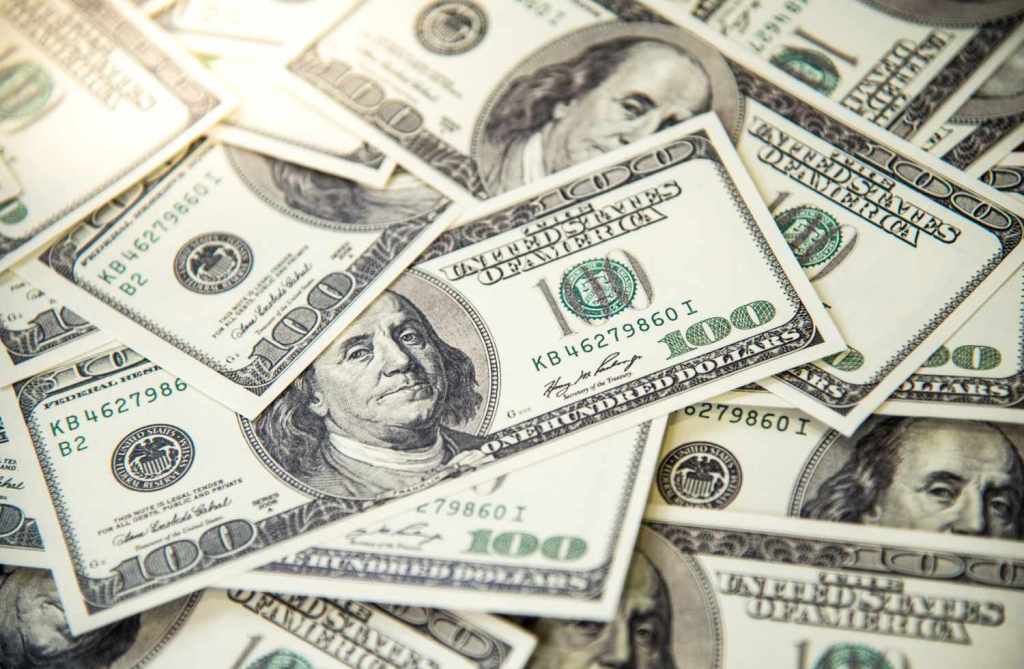
It’s not just paper with a president’s face on it.
It’s the backbone of the modern financial system.
And until global trust shifts meaningfully elsewhere, the hidden power of the dollar will continue shaping economies far beyond American borders.
 The Econ Odyssey
Leave a comment