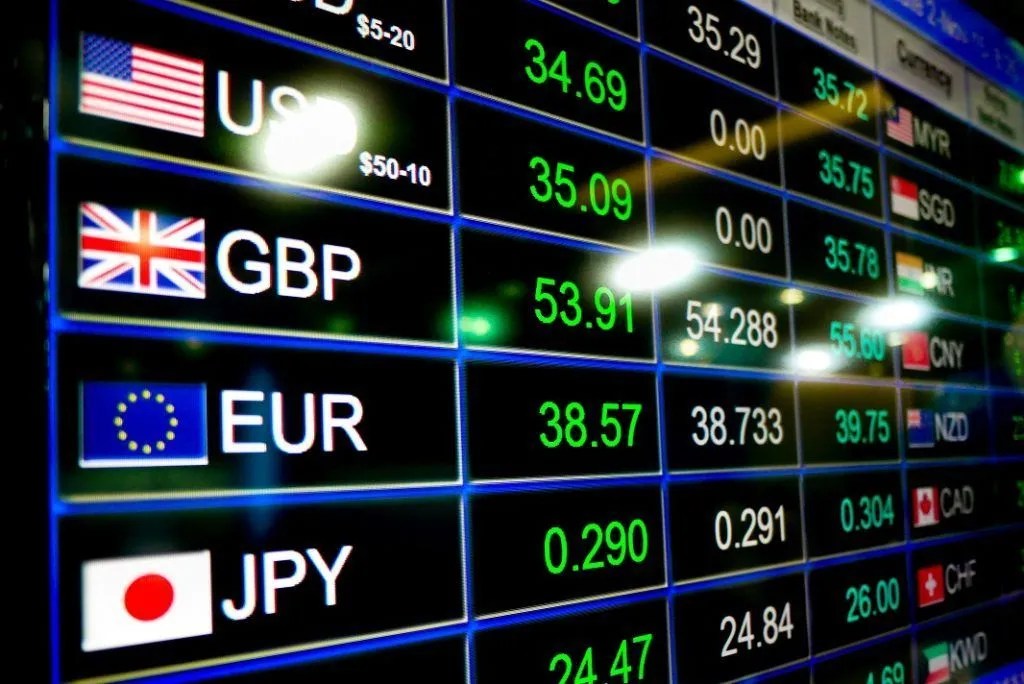
You’ve probably seen it on the news:
“The rupee weakens against the dollar.”
“The dollar strengthens globally.”
“The currency has depreciated by 3%.”
And unless you’re traveling or importing something, it feels distant.
But exchange rates quietly shape:
- inflation
- trade
- investment flows
- interest rates
- even geopolitics
The exchange rate is simply the price of one currency in terms of another. And like all prices in economics, it moves based on demand and supply.
But here’s the twist:
The demand and supply for currencies are influenced by trade, capital flows, expectations, central banks, and global risk sentiment — all at once.
That’s why exchange rates feel chaotic.
What Actually Determines an Exchange Rate?
At the simplest level, a currency strengthens when demand for it rises.
Why would people demand a currency?
- To buy goods from that country (exports)
- To invest in its assets (stocks, bonds, real estate)
- To hold it as a reserve
- To park money in “safe” economies
If foreign investors want Indian bonds, they must buy rupees. If global funds rush into US Treasury bonds, they must buy dollars.
Currencies rise when capital flows in. They fall when capital flows out.
Trade matters. But in modern economies, capital flows often matter more.
What Does “Depreciation” Actually Mean?
When a currency depreciates, it becomes cheaper relative to others.
If ₹80 per dollar becomes ₹85 per dollar, the rupee has weakened.
That sounds negative — but it isn’t always.
A weaker currency:
- Makes exports cheaper abroad
- Makes imports more expensive
- Can boost domestic production
- But can also fuel inflation
So depreciation is neither inherently good nor bad. It depends on context.
If a country imports a lot of oil (like India), a weaker currency makes fuel more expensive, which pushes inflation higher.
Exchange rates connect directly to everyday prices.
Floating vs Fixed: Why Some Countries Let It Move
Some countries have floating exchange rates, meaning the currency’s value is determined by market forces.
Others adopt fixed or managed exchange rates, where the central bank intervenes to keep the currency within a target range.
Floating systems adjust automatically — but can be volatile.
Fixed systems offer stability — but require large foreign exchange reserves and discipline.
There is no perfect system. Only trade-offs.
Again, economics comes back to choice under constraint.
Why Interest Rates Move Currencies
One of the biggest drivers of exchange rates is interest rates.
If the US raises rates, global investors move money into US assets to earn higher returns. That increases demand for dollars.
Higher interest rates → stronger currency.
Lower interest rates → weaker currency.
This is why central bank decisions ripple globally.
When the Federal Reserve tightens policy, emerging markets often experience capital outflows. Their currencies weaken. Inflation rises. Policy becomes constrained.
Exchange rates transmit monetary policy across borders.
The Global Power of the Dollar
The US dollar dominates global trade and finance. Commodities like oil are priced in dollars. International debt is often denominated in dollars.
That means when the dollar strengthens:
- Dollar debt becomes more expensive to repay
- Emerging markets face financial stress
- Global liquidity tightens
Exchange rates aren’t just prices. They’re power structures.
Countries that issue reserve currencies enjoy more flexibility. Others must constantly defend stability.
Why Exchange Rates Feel So Unpredictable
Exchange rates don’t just respond to economic data.
They react to:
- Political instability
- Elections
- Wars
- Speculation
- Expectations
Currencies can move sharply based on what investors think will happen, not just what has happened.
And because forex markets operate 24/7 with massive volumes, small shifts in sentiment can cause large swings.
That volatility is confusing — but it reflects how deeply financial markets are interconnected.
Why You Should Care
Even if you never trade currencies, exchange rates affect you.
They influence:
- The price of imported goods
- Inflation
- Fuel costs
- Travel
- Stock market performance
- Job competitiveness in export industries
They even shape long-term growth by affecting investment decisions.
Exchange rates sit quietly in the background — but they connect domestic economies to global ones.
The Real Lesson
Exchange rates feel confusing because they sit at the intersection of:
- Trade
- Finance
- Policy
- Expectations
- Geopolitics
They are not controlled by one force. They are negotiated constantly by markets.
The price of money is unstable because the world is unstable.
And maybe that’s the deeper truth:
In a globalized economy, no currency moves alone.
Every exchange rate tells a story — not just about one country, but about how the world is flowing.
 The Econ Odyssey
Leave a comment