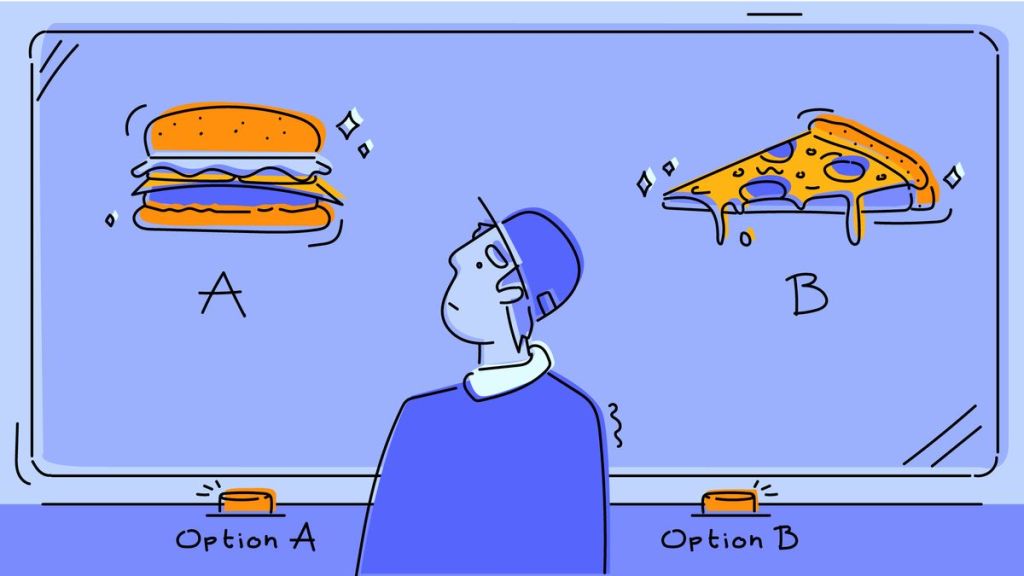
We like to think decisions are about what we gain.
A new internship.
A dinner out.
A weekend trip.
A degree.
We calculate the visible cost — money spent, time required, effort involved.
But economics asks a slightly more uncomfortable question:
What did you give up to get it?
That forgone alternative — the road not taken — is called opportunity cost.
And it is the most invisible, most ignored, and most powerful concept in all of economics.
What Opportunity Cost Really Means
Opportunity cost isn’t just “cost.” It’s the value of the next best alternative you didn’t choose.
If you spend ₹1,000 on concert tickets, the cost isn’t just ₹1,000. It’s whatever that ₹1,000 could have earned elsewhere — savings, investments, another experience.
If you spend three hours scrolling, the cost isn’t electricity or Wi-Fi. It’s what you could have done with those three hours.
Opportunity cost forces us to think relationally.
It reminds us that resources — time, money, attention — are scarce. And scarcity means trade-offs.
The Money Version
Imagine you have ₹10,000.
You can:
- invest it
- spend it
- save it
If you invest and earn returns, your opportunity cost is the immediate consumption you gave up. If you spend it now, your opportunity cost is the future value it could have generated.
Money makes opportunity cost easier to calculate — because it’s measurable.
But money is the least interesting example.
The Time Version
Time is where opportunity cost becomes personal.
You can:
- study
- work
- relax
- build something
- spend time with someone
Every hour used in one way cannot be used in another.
Yet we rarely ask:
Is this the best use of this hour?
We focus on what we’re doing — not what we’re sacrificing.
And because the alternative is invisible, it doesn’t feel like a cost.
But it is.
Why Economists Care So Much
Opportunity cost sits at the heart of microeconomics.
When firms decide what to produce, they give up producing something else. When governments allocate budgets, spending in one sector means less in another. When countries specialize in trade, they sacrifice producing other goods.
The famous Production Possibilities Frontier (PPF) exists because of opportunity cost. Producing more of one good means producing less of another.
There is no free expansion without trade-offs.
Growth itself is about increasing how much opportunity cost we can manage — not eliminating it.
The Emotional Trade-Offs
Opportunity cost doesn’t always look like a graph. Sometimes it looks like life choices.
Choosing stability may mean giving up risk.
Choosing ambition may mean sacrificing comfort.
Choosing independence may mean losing certainty.
The hardest decisions aren’t about cost — they’re about comparison.
And comparison requires clarity.
Economics doesn’t tell you which option to choose.
It simply insists that you acknowledge what you’re giving up.
Why We Ignore It
We ignore opportunity cost because it’s invisible.
When you buy something, you see what you gain.
You don’t see the alternative disappearing.
When you say yes to something exciting, you feel momentum.
You don’t feel the silent no to everything else.
Humans are present-focused. We value what’s in front of us more than what’s hypothetical.
But the hypothetical is where opportunity cost lives.
The Discipline of Asking Better Questions
There’s a simple way to bring opportunity cost into focus:
If I choose this, what am I not choosing?
Not in a dramatic way.
Not in a regretful way.
Just in an honest way.
Because every choice has a price — even if no one sends you the bill.
And sometimes the invisible price is higher than the visible one.
The Bigger Picture
Opportunity cost explains why:
- There’s no such thing as a “free” government program — funds come from somewhere.
- “Free time” is never truly free — it could have been used differently.
- Saying yes to everything eventually means saying no to focus.
It’s not about guilt.
It’s about awareness.
Economics isn’t obsessed with money. It’s obsessed with trade-offs.
And opportunity cost is the language of trade-offs.
The Real Lesson
Every decision feels like movement forward.
But economics quietly reminds us that movement forward always means leaving something behind.
Opportunity cost isn’t there to paralyse you.
It’s there to sharpen you.
Because when you understand what you’re giving up, your yes becomes more intentional.
And that might be the most valuable return of all.
 The Econ Odyssey
Leave a comment