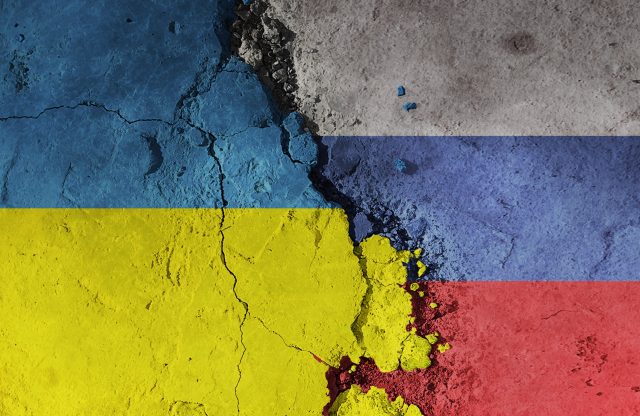
When war broke out between Russia and Ukraine, it was easy to think of it as a regional crisis. Two neighbouring countries. A geopolitical conflict. Tragic, but distant.
And yet, within weeks, fuel prices spiked across continents. Food prices surged in countries thousands of kilometres away. Inflation worsened almost everywhere. Central banks scrambled. Governments panicked.
So how did a war in Eastern Europe end up affecting grocery bills, energy costs, and economic stability across the globe?
Because in today’s world, no economy exists in isolation.
The World Economy Is a Web, Not a Map
It’s tempting to imagine countries as independent units — each managing its own economy, policies, and priorities. But modern economies don’t operate in isolation. They’re tied together through trade networks, financial flows, energy dependence, and shared expectations.
This interdependence is usually invisible when things are stable. Goods move smoothly, prices adjust gradually, and supply chains hum quietly in the background.
But when a major shock hits one node of the system, the effects ripple outward.
The Russia–Ukraine war wasn’t just a political or military conflict. It was a systemic shock — one that exposed how fragile and interconnected the global economy really is.
Food: When One Region Feeds the World
Ukraine is often called the breadbasket of Europe, and together with Russia, it plays an outsized role in global food markets. The two countries are major exporters of wheat, corn, barley, and sunflower oil — staples for millions of people worldwide.
When war disrupted farming activity, destroyed infrastructure, and blocked Black Sea ports, global food supply tightened almost overnight. Grain that normally flowed to international markets simply didn’t arrive.
Less supply with the same demand meant higher prices.
But the impact went beyond food itself. Russia is also a major exporter of fertilisers, which are essential for agricultural production worldwide. Rising fertiliser prices reduced crop yields elsewhere, amplifying the initial shock.
Countries in Africa, the Middle East, and South Asia — many of which rely heavily on grain imports — were hit the hardest. Governments were forced to increase food subsidies, restrict exports, or absorb higher import bills. In some cases, rising food prices translated into political instability.
A war between two countries reshaped food security for dozens of others.
Energy: Europe’s Wake-Up Call
Energy was the fastest and most dramatic transmission channel.
For years, Europe depended heavily on Russian oil and natural gas — not by accident, but by design. Russian energy was cheap, reliable, and deeply embedded in European infrastructure.
When sanctions, supply disruptions, and geopolitical uncertainty entered the picture, energy prices soared. Heating costs exploded. Electricity prices surged. Industries dependent on energy-intensive production slowed or shut down.
Governments rushed to secure alternative suppliers, reopen coal plants, and accelerate renewable investments — all at enormous cost.
But energy prices don’t stop at borders. Higher fuel costs increased transportation expenses, manufacturing costs, and electricity bills worldwide. Energy inflation fed directly into global inflation, raising the cost of living far beyond Europe.
Energy became the bridge through which a regional war entered almost every economy.
Inflation Goes Global
The war didn’t create inflation on its own — but it intensified pressures that were already building.
Rising food and energy prices triggered cost-push inflation, where higher production costs force firms to raise prices. Unlike demand-driven inflation, this kind is especially painful because it reduces purchasing power without increasing incomes.
Because food and energy are universal inputs, inflation became synchronised across countries. This wasn’t just a local price spike — it was global.
Central banks responded the only way they could: by tightening monetary policy. Interest rates rose across advanced and emerging economies alike.
The result? Slower growth, costlier borrowing, and increasing pressure on households and governments — all triggered by a conflict most people had no role in.
Financial Markets and Uncertainty
Financial markets don’t wait for shortages — they react to expectations.
As the war escalated, investors fled risky assets and sought safety in the US dollar, gold, and government bonds. Stock markets became volatile. Capital flowed out of emerging markets.
For countries already struggling with high debt or weak currencies, this was devastating. Borrowing costs rose. Currency values fell. Debt servicing became harder.
Even economies with no direct trade ties to Russia or Ukraine felt the impact through financial contagion.
In global markets, fear travels faster than goods.
Supply Chains Don’t Care About Borders
Modern production relies on intricate global supply chains. Raw materials are extracted in one country, processed in another, and assembled somewhere else entirely.
The Russia–Ukraine war disrupted access to:
- metals
- energy inputs
- fertilisers
- key industrial components
Manufacturers across the world faced delays, shortages, and rising costs. These disruptions slowed production and pushed prices higher, reinforcing inflationary pressures.
When one link breaks, the entire chain weakens.
Expectations Matter More Than Missiles
One of the most powerful — and least visible — transmission channels reminded economists of an old truth: expectations shape reality.
When firms expect costs to rise, they raise prices pre-emptively. When workers expect inflation, they demand higher wages. When consumers expect prices to keep climbing, they spend sooner rather than later.
These behaviours can turn temporary shocks into persistent inflation.
The war reshaped expectations about energy security, globalisation, and geopolitical risk. And once expectations shift, they’re hard to reverse.
Economic outcomes don’t just respond to events — they respond to beliefs about the future.
Why Some Countries Hurt More Than Others
The crisis didn’t affect everyone equally.
Import-dependent countries felt the shock more than exporters. Poorer households spent a larger share of income on food and fuel, making inflation more painful. Countries with limited fiscal space struggled to cushion the blow.
The war exposed deep inequalities — not just between countries, but within them.
Some economies had buffers. Others absorbed the shock directly.
The Bigger Lesson
The Russia–Ukraine war revealed an uncomfortable reality:
In a globalised world, there is no such thing as “someone else’s crisis.”
Wars are fought on battlefields, but they’re felt through prices, policies, and livelihoods everywhere. Globalisation spreads growth and opportunity — but it also spreads risk.
The challenge ahead isn’t to retreat from interconnectedness, but to build systems that are global yet resilient.
Because the next crisis may begin in one country but it will never end there.
 The Econ Odyssey
Leave a comment